Editor's Corner
By Aulba"ni" Hoard Teen Staff Co-Editor  This is our first magazine created as a group at the South Dallas Cultural Center; we are proud to introduce it to you. In our Summer 2010 Issue, we are going to tell you stuff that you didn’t know regarding the country of Haiti and the gateway of Africa. As an Co-Editor I have to make sure that everything fits into the scope of our themes in the magazine. Everything has to fit into what we are working on pertaining to African gateways and the first and only independent republic in the world. We are also working on improving our reading and critical thinking skills. Everyday, before the class begins we sit in a circle and talk about what we read the previous evening in our local African-American newspaper, The Dallas Weekly. There are a lot of individuals who took part in publishing this magazine including the administrative staff, our teen staff, teachers, community artists, and volunteers. We had to work together in order for this magazine to become reality. I am proud of what I accomplished and my staff this summer. Get ready to be immersed in creativity. Email me and tell me what you think of NURU Magazine. |
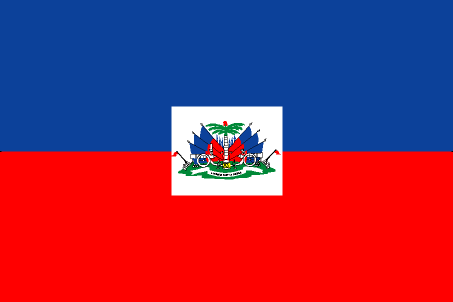
Did You Know: The Haitian Flag? By Curtis Fegans, Teen Staff Writer
The colors of the
Haitian flag represent different
meanings regarding their independence from the French in January of 1806. The Haitian
flag has three colors. Blue represents the colored population and its African
connection. The bottom of the Haitian flag is red which represents the symbol
of the multi-ethnic race of the country. The flag has a coat of arms which represents strength and unity. There were many things changed to the flag when Haiti won its independence from the French. According to our Rights of Passage Teacher Jendayi-Hills Jones, "The removal of the white stripe was considered the removal/abolition of their oppression from the white man, the red and blue were united to represent the unity that occurred between the Africans and the Mulatto's, that wasn't always their relationship. Even the motto changed. While the French had the flag it was Live Free or Die, after Haiti's Revolution it became "Liberty or Death." Read the Debut Column: From The Perspective of a Teenage Girl Named Sasha By Lillian "Sasha" Bowman Teen Staff Editor at Large  Good Hair Film Review |
|
©NURU Magazine was created by students at The South Dallas Cultural Center's Summer Camp-2010 in conjunction with litARTMedia™.
|
||